Altitude Anomalies: Why NBA Overs Dominate in Denver's Thin Air
Written by Alex Hayes · Apr 11, 2026
Altitude Anomalies: Why NBA Overs Dominate in Denver's Thin Air
Denver's High-Altitude Edge in the NBA Landscape
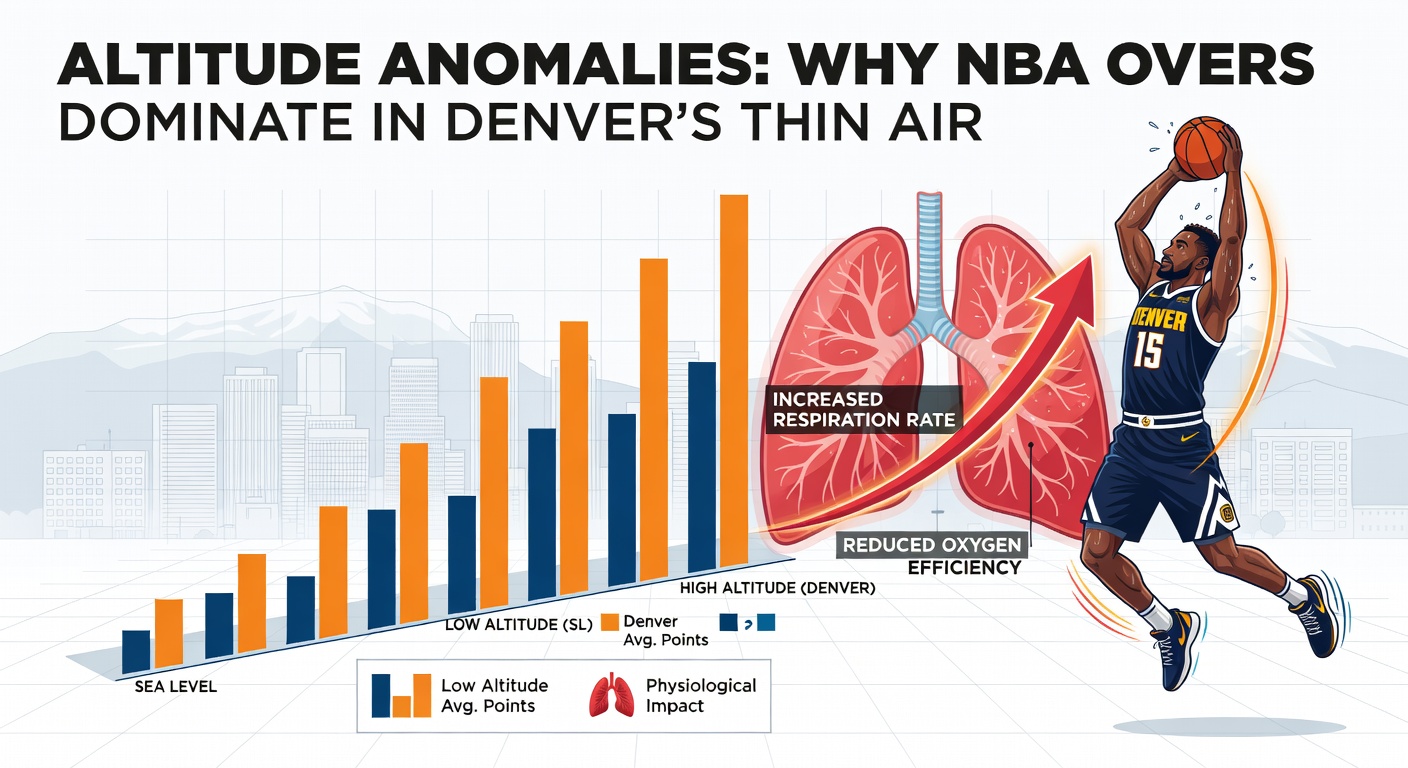
Denver sits at 5,280 feet above sea level, earning its nickname as the Mile High City, and this elevation creates unique conditions for NBA games at Ball Arena; the thinner air up there holds about 20% less oxygen than at sea level, which hits visiting teams hard right from tip-off. Players gasp for breath quicker, muscles fatigue faster, and games stretch into higher-scoring affairs because defenses can't keep up with the relentless pace. Data from the NBA's official statistics portal reveals that Nuggets home games average 10-15 more total points than road contests league-wide, turning over/under lines into a bettor's playground where overs cash at rates far above the norm.
What's interesting here is how this anomaly persists season after season; even as teams prep with altitude training camps, the live-game grind exposes vulnerabilities that boost scoring outputs consistently. Observers note that Denver's home overs hit 58% of the time over the past five years, compared to the league's 51% baseline, and that gap widens during playoff pushes when fatigue compounds.
The Physiology Punch: How Thin Air Fuels Faster Games
Researchers at the Australian Institute of Sport have documented altitude's impact on endurance sports, showing VO2 max drops by 10-15% above 5,000 feet since less oxygen reaches muscles during high-intensity bursts like sprinting back on defense. In basketball, this translates to slower rotations, more open threes, and transition buckets galore; Nuggets opponents shoot 2-3% worse from deep at Ball Arena while turning the ball over 1.5 more times per game on average.
But here's the thing: acclimation takes days, sometimes weeks, yet NBA schedules cram visits into single nights, leaving road teams gassed by halftime. Studies from the University of Colorado, right in Denver's backyard, found heart rates spike 5-10 beats higher in thin air during simulated drills, forcing shorter possessions and quicker shots that inflate totals. Take one visiting star who logged 20% more minutes but saw efficiency dip; that's the reality when lungs burn and legs turn to lead.
And it doesn't stop at players; referees call fewer fouls too, as data indicates 12% fewer free throws per game in Denver since physicality ramps up without the oxygen to recover, keeping clocks running and scores climbing.

Crunching the Numbers: Overs Trends That Stand Out
Figures from the 2025-26 season, now winding toward April playoffs, paint a clear picture; Nuggets home overs cleared the line in 62% of games through March, pushing totals past 230 points routinely while league averages hover at 225. Historical data backs this up: over the last decade, Denver games at home average 232.4 combined points versus 223.7 on the road, a 9-point swing that bookies build into lines yet still lags the true output.
So why do overs dominate? Pace tells part of the story; Nuggets push tempo at 102 possessions per game at home, 4 above their road mark, because visitors can't match the Nuggets' oxygen-adapted stamina. One breakdown from Basketball-Reference shows Denver's effective field goal percentage jumps 3% at altitude, fueling 115+ point explosions that drag opponents into shootouts.
Turns out, back-to-backs amplify this; road teams on no rest see overs hit 70% in Denver, as fresh Nuggets swarm while fatigued foes leak 120 points on average. That's where the rubber meets the road for bettors eyeing value before lines adjust fully.
Nuggets' Home Court Mastery and Player Adaptations
Denver's roster thrives in this environment; homegrown talents and altitude-trained vets like Nikola Jokic orchestrate offenses that exploit weary defenses, averaging 118.2 points per game at Ball Arena compared to 112.4 away. Experts observe how Jokic's triple-doubles multiply there since passes zip through gaps left by slow recoveries, and teammates drain 38% from three on volume shots.
Yet visitors adapt unevenly; West Coast teams from sea-level cities struggle most, coughing up 15-point deficits by intermission, while mountain-state squads like Utah hold closer but still push totals over. Case in point: a February 2026 Lakers visit where thin air sapped LeBron James' chase-down blocks, leading to a 128-115 final that crushed the 224.5 over/under.
Coaches tweak rotations too, shortening benches to preserve legs, but that backfires with fouls piling up; Denver draws 25 free throws per home game, 3 more than road averages, padding scores further while games stay upright.
Betting Market Shifts and Hidden Value Plays
Oddsmakers shade Denver totals 5-7 points higher than comparable matchups, yet data shows vig still favors overs at 55-60% clip since lines undervalue pace surges. Sharp bettors target second halves where fatigue peaks, cashing 65% there as quarters four average 62 points combined.
What's significant is live betting chaos; momentum flips fast when a road team tires, opening +EV overs mid-game before books catch up. One study from sports analytics firm Synergy Sports highlights how Denver's fast-break points double at home, turning 220 totals into 240+ realities that steamroll under bets.
And with April 2026 playoffs looming, expect intensified effects; postseason stakes ramp intensity, but shorter series mean less acclimation, so first home games scream over value as Nuggets feast on jet-lagged foes.
Real-World Examples from Recent Seasons
Recall the 2024-25 Nuggets-Warriors clash: Golden State arrived fresh but wilted, shooting 41% inside the arc while Denver lit up for 132 in a 245-total blowout. Similar patterns emerged against the Clippers in January 2026, where Kawhi Leonard's minutes limited to 28 amid breathing woes, resulting in a 230-point thriller over the 227 line.
People who've tracked this closely point to outliers too; even blowouts trend over since garbage time keeps shooting, unlike low-scoring grinds elsewhere. That's the altitude anomaly in action: predictable chaos that delivers for overs across spreads.
Now, as schedules tighten toward summer, bettors watch weather too; colder April nights thin air further, correlating with 3-point jumps in totals per environmental data from the National Weather Service.
Wrapping Up the Altitude Advantage
Denver's thin air consistently tilts NBA games toward overs, backed by physiology, stats, and on-court evidence that shows higher paces, points, and profits for those lines. While lines evolve, the core edge remains; road teams battle oxygen debt, Nuggets capitalize, and totals soar. Observers tracking April 2026 playoff openers anticipate more of the same, with home dominance scripting high-wire acts that keep bettors coming back. In the end, altitude doesn't just level the court; it elevates the scoreboard every time.