Atmospheric Variables Reshaping Thoroughbred Performance Metrics at Global Racing Venues
Written by Carlo Neumann · Jun 27, 2026
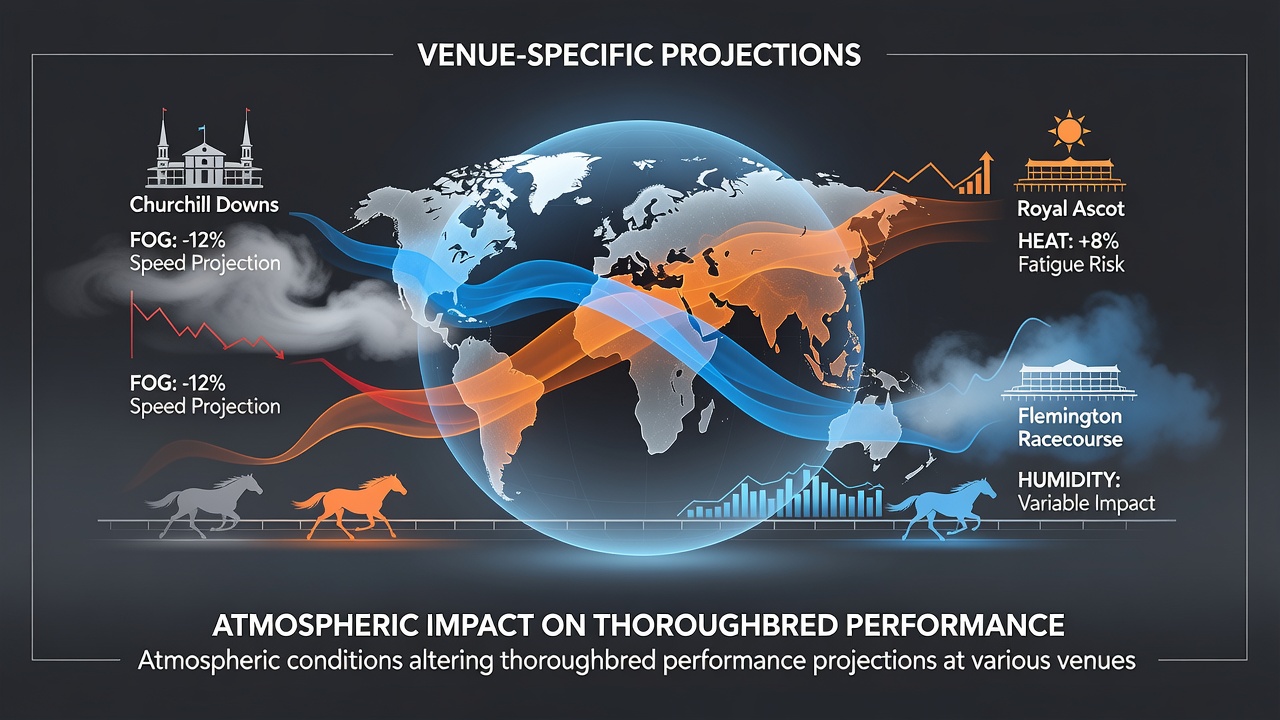
Atmospheric Variables Reshaping Thoroughbred Performance Metrics at Global Racing Venues
Atmospheric conditions exert measurable influence on thoroughbred performance projections at racecourses around the world and data from multiple jurisdictions shows consistent patterns in how temperature, humidity, air pressure and wind alter race times and stamina requirements. Researchers at equine performance laboratories have documented these effects through controlled studies and on-track monitoring programs that track heart rates, lactate levels and recovery times under different environmental loads.
Temperature Thresholds and Equine Thermoregulation
High ambient temperatures force thoroughbreds to divert energy toward cooling mechanisms and studies conducted by veterinary universities indicate that core body temperatures above 40 degrees Celsius correlate with reduced stride efficiency and slower sectional times. In contrast, cooler conditions below 15 degrees Celsius allow horses to maintain optimal muscle function without excessive fluid loss, although sudden drops can stiffen joints in animals unaccustomed to the change. Observers note that tracks in desert regions schedule early morning cards during summer months to keep surface and air temperatures within ranges that preserve projected performance levels.
Altitude Effects on Oxygen Uptake
Venues situated at elevation present distinct challenges because lower oxygen partial pressure reduces aerobic capacity during prolonged efforts. Data collected at facilities above 1,500 metres shows that horses require longer acclimatisation periods, often two to three weeks, before returning to baseline speed figures. Thoroughbreds racing at sea-level tracks after competing at altitude venues frequently post improved times once they readjust to higher oxygen availability and this pattern appears repeatedly in international travel records kept by racing authorities.
Humidity, Wind and Barometric Pressure Interactions
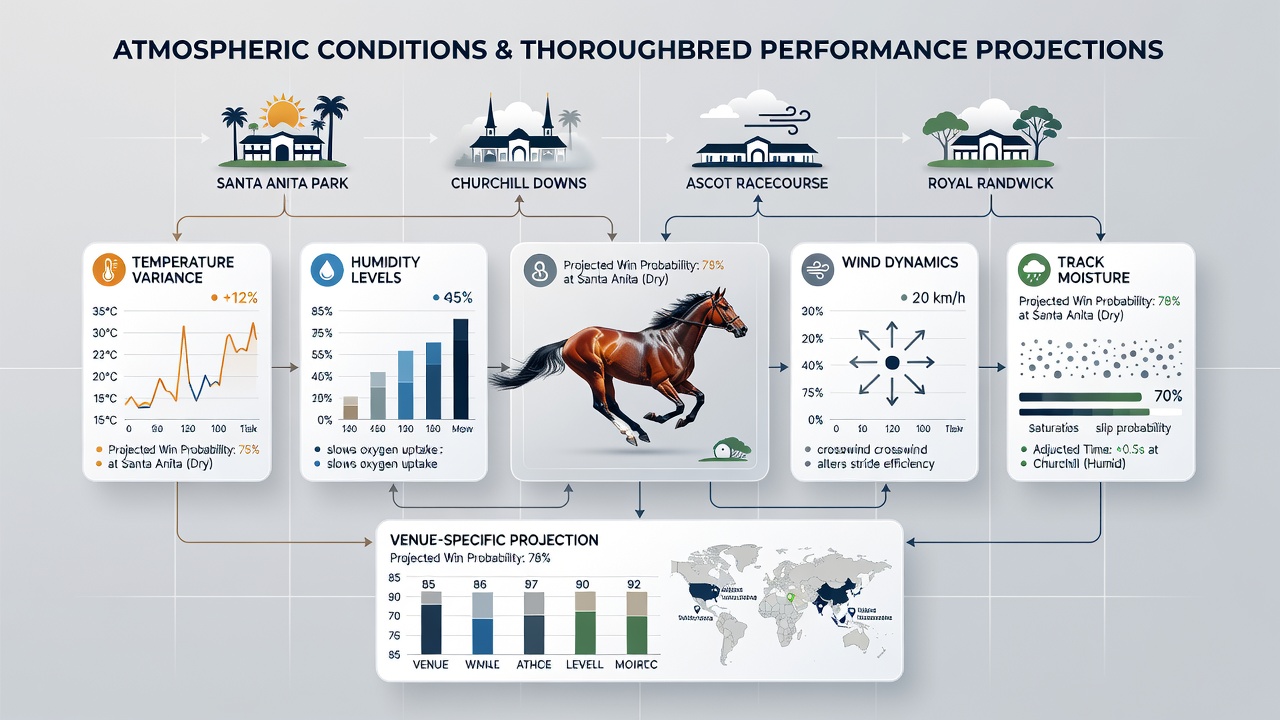
Relative humidity above 70 percent impairs evaporative cooling and forces horses to rely more heavily on respiratory heat loss, which increases the risk of respiratory fatigue over longer distances. Wind direction and speed modify these dynamics further because tailwinds reduce air resistance on straight sections while crosswinds demand additional muscular effort to maintain balance through turns. Barometric pressure shifts ahead of weather fronts also correlate with changes in track surface moisture retention and researchers have linked falling pressure readings to firmer going that favours front-running types in sprint events.
One study tracking races across three continents found that combinations of high heat and humidity produced the largest deviations from standard performance models, with average winning times lengthening by up to 1.8 seconds over 1,600 metres compared with moderate conditions. Those same datasets reveal that wind speeds exceeding 20 kilometres per hour can either compress or extend margins depending on whether the gusts align with or oppose the prevailing direction of the home straight.
Venue-Specific Patterns Observed in 2026
Monitoring programs active through June 2026 at several major tracks continue to refine projection algorithms that incorporate real-time atmospheric readings. Facilities in Australia and North America now integrate on-site weather stations that feed directly into handicapping systems used by official timekeepers. These systems adjust expected pace figures when humidity spikes or when barometric readings indicate incoming fronts and the adjustments have improved the accuracy of sectional time benchmarks across multiple race meetings.
Trainers adapt preparation routines accordingly by altering gallop schedules and using portable climate-controlled stables during transit between venues with contrasting conditions. Data compiled by international racing federations shows that horses with prior exposure to similar atmospheric profiles post more consistent results than those encountering new combinations of heat, wind and altitude for the first time.
Conclusion
Atmospheric variables remain a quantifiable component of thoroughbred performance modelling and ongoing data collection at diverse venues continues to sharpen the precision of projections used by industry participants. Integration of meteorological inputs with physiological measurements provides clearer frameworks for anticipating how conditions at any given track will interact with a horse's established speed and stamina profile.