Climatic Shifts Reshaping Trap Advantages at Major UK Greyhound Circuits
Written by Morgan Walter · Jul 25, 2026
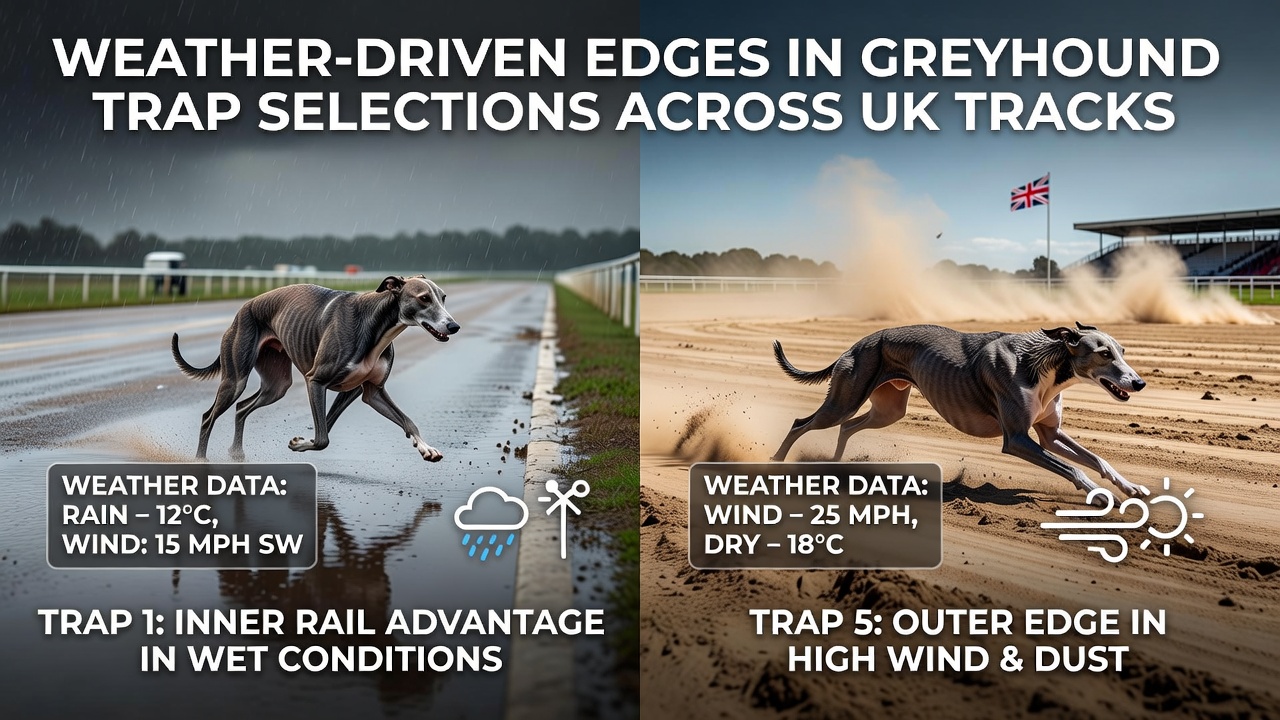
Climatic Shifts Reshaping Trap Advantages at Major UK Greyhound Circuits
Weather conditions alter track surfaces and wind patterns in ways that consistently shift performance edges toward certain traps at UK greyhound meetings, and data from multiple venues illustrates these repeatable effects across different circuits.
Track Surface Responses to Rainfall and Humidity
Rainfall changes the consistency of sand-based tracks, which in turn affects acceleration out of the traps and the path dogs take in the opening sections of races. Venues such as Perry Barr and Sheffield report measurable differences in rail position times when precipitation exceeds 5 millimetres in the preceding 24 hours, because the inside traps encounter firmer going closer to the rail while outer traps face looser material pushed outward by drainage flow.
Humidity levels above 80 percent slow evaporation rates and keep surfaces heavier for longer periods, which observers note tends to compress the advantage usually held by traps one and two at tracks with pronounced cambers. Studies conducted at several northern circuits show that these conditions extend sectional times for inside runners by an average of 0.08 seconds over 400-metre distances, while traps four and five maintain more consistent early speed.
Wind Direction and Its Influence on Trap Positioning
Prevailing westerly winds across southern England create measurable drag differentials that favour traps positioned on the lee side of the circuit during evening meetings. At tracks oriented east-west, such as Romford and Harlow, data collected over multiple seasons indicates that dogs drawn in traps five and six record higher win rates when wind speeds exceed 15 mph from the west, because the outer traps receive partial shelter from grandstand structures.
Conversely, northerly circuits like Newcastle and Sunderland experience stronger crosswinds that push runners toward the inside rail in the first bend. Records from these venues demonstrate that trap-one selections improve their strike rate under these conditions, while trap-six runners lose ground due to increased lateral resistance in the opening 50 metres.
Regional Variations Across UK Venues
Each circuit presents its own microclimate profile that interacts with trap geometry. Southern tracks experience milder temperature swings that preserve consistent surface moisture, whereas northern and Scottish venues see sharper drops that can freeze upper layers overnight and create patchy going by afternoon racing. July 2026 brought above-average rainfall across the Midlands, and operators at several tracks recorded a temporary shift in trap-three and trap-four success rates during that period because drainage patterns altered the usual rail bias.
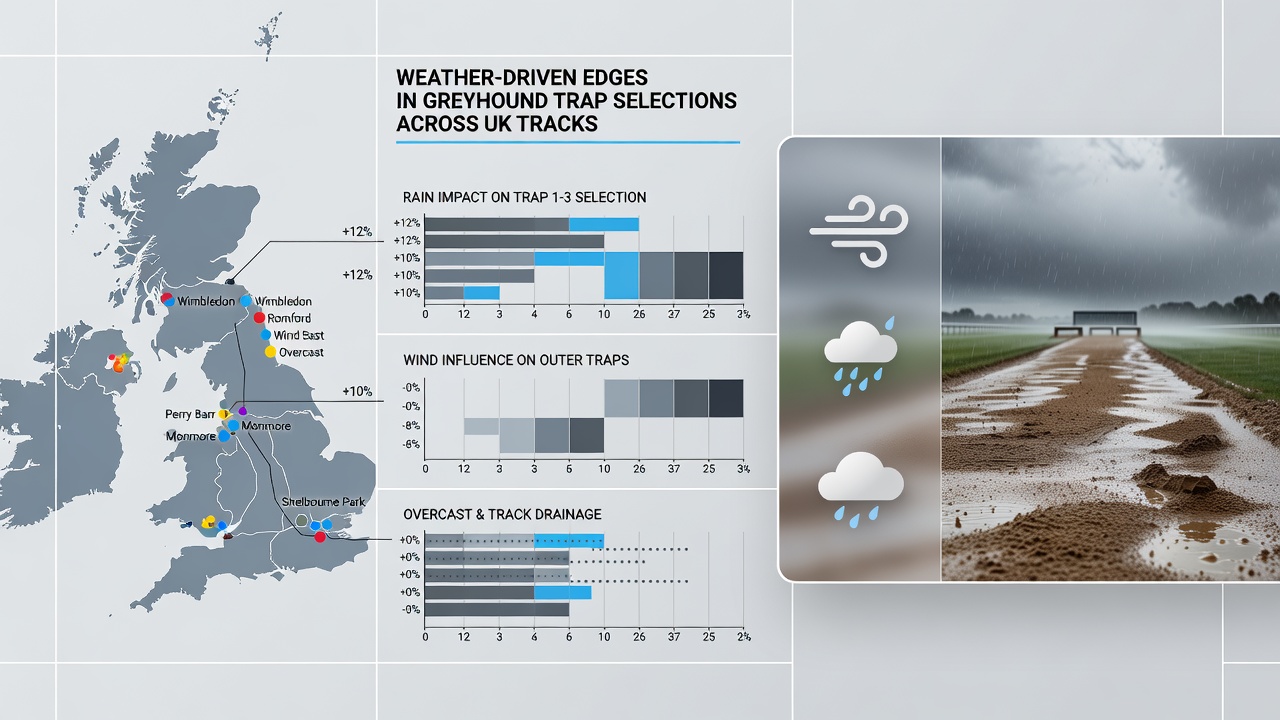
Coastal locations such as Brighton and Hove contend with salt-laden air that accelerates surface compaction, which in turn reduces the early speed edge normally associated with inside draws. Figures compiled by regional racing associations show that trap-two and trap-three selections post higher place percentages at these venues under high-wind coastal conditions compared with inland circuits.
Temperature Effects on Canine Performance from Traps
Ambient temperatures influence muscle response times and stamina distribution in the early race segments. When daytime highs remain below 12 degrees Celsius, dogs drawn in outer traps tend to conserve energy better on the longer path around the first bend, according to performance logs maintained by multiple tracks. Warmer conditions above 20 degrees produce the opposite pattern, with inside traps benefiting from shorter distances and quicker access to the rail before fatigue sets in.
Researchers tracking seasonal patterns have identified that evening meetings in late spring and early autumn produce the most pronounced temperature-driven trap biases because rapid cooling after sunset creates surface temperature gradients across the track width.
Data Sources and Analytical Approaches
Industry reports from the Australian Greyhound Racing Association provide comparative methodologies that UK analysts adapt when evaluating weather variables. Additional insights appear in peer-reviewed papers hosted by university veterinary and sports science departments that examine environmental impacts on canine locomotion under controlled track simulations.
Conclusion
Weather variables produce documented, location-specific shifts in trap performance across UK greyhound circuits, and continued collection of sectional and meteorological data allows for refined identification of these edges at individual venues.