Fatigue Patterns Reshaping Over-Under Markets in Successive Basketball Matchups
Written by Rafael Powell · Jun 6, 2026
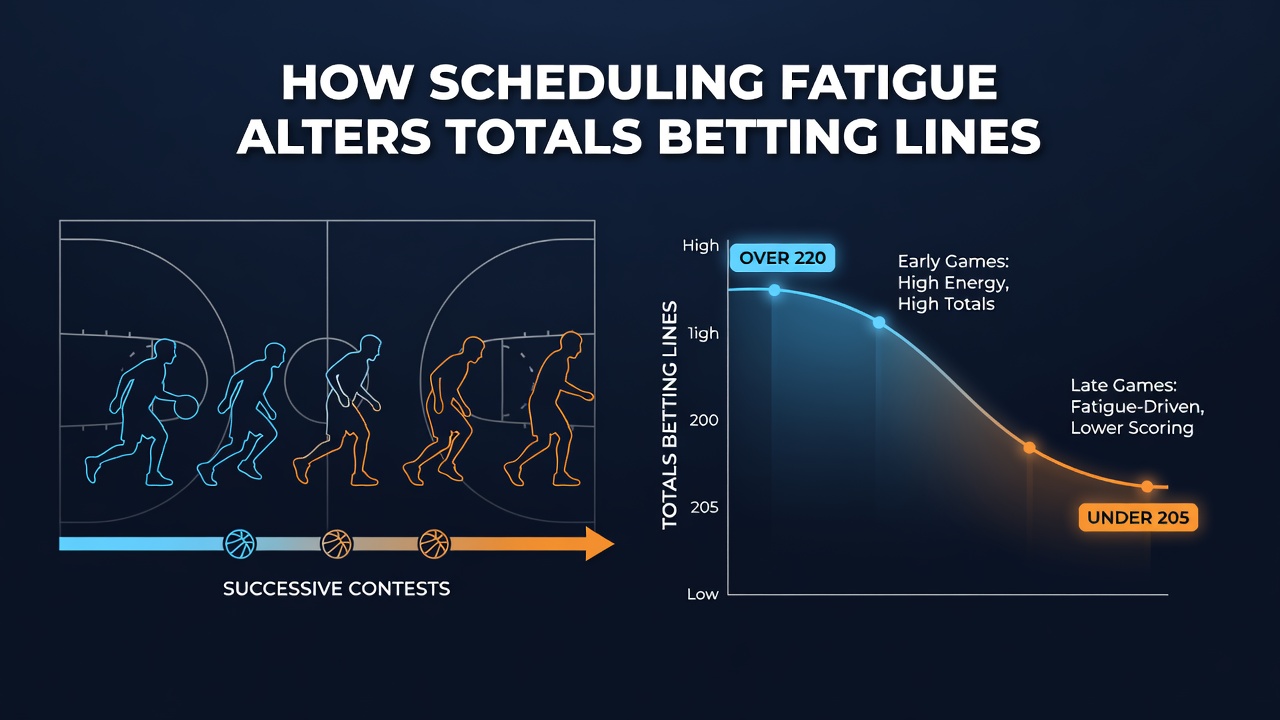
Fatigue Patterns Reshaping Over-Under Markets in Successive Basketball Matchups
Scheduling demands in professional basketball create measurable effects on player performance that directly influence totals betting lines when teams play on consecutive nights, and researchers have documented consistent drops in scoring output across back-to-back contests throughout multiple seasons. Data from league tracking systems reveals that teams averaging fewer than 110 points in the second game of such pairings compared with their season norms, which forces oddsmakers to recalibrate over-under thresholds accordingly. Observers note that rest differentials between opponents often widen these gaps further when one squad arrives after a cross-country flight while the other enjoys home-court recovery time.
Core Mechanisms Behind Scoring Reductions
Travel requirements combined with limited recovery windows trigger physiological changes including elevated cortisol levels and reduced reaction times that studies link to lower field goal percentages in the opening quarters of the second contest. Teams facing three games in four nights show even steeper declines, with league-wide figures indicating an average of 8.4 fewer combined points per game in those scenarios. Analysts track these trends through play-by-play logs that highlight fewer transition opportunities and increased reliance on half-court sets, patterns that compress total scoring outputs in predictable ways.
Coaching adjustments compound the issue as staffs shorten rotation minutes for key contributors to preserve energy for later matchups, which reduces offensive efficiency across entire lineups. Evidence from performance databases shows bench units posting lower assist-to-turnover ratios during these stretches, further limiting point production. Those who monitor advanced metrics observe corresponding spikes in defensive lapses that occasionally offset scoring drops, yet the net effect on totals remains downward in most documented cases.
Market Adjustments and Line Movement
Betting operators respond to these patterns by shading totals lines lower when schedules indicate back-to-back situations for one or both teams, with movement often occurring within hours of lineup release. Historical data compiled across several seasons demonstrates that opening totals for such games sit approximately 4.5 points below neutral-rest equivalents before sharp action arrives. Market makers incorporate travel distance and time zone changes into their models, which produces refined numbers that reflect cumulative fatigue rather than isolated team strengths.
Sharp bettors who identify these edges frequently target unders when the line fails to account fully for rest disparities, particularly in games involving teams coming off overtime contests the previous evening. Figures from sports data providers confirm that unders cover at elevated rates during the middle third of the regular season when schedules grow most congested. What's interesting is how public perception sometimes lags behind these adjustments, creating temporary value on the under side before lines stabilize.
Regional and Seasonal Variations
Western Conference teams encounter amplified effects during stretches that include multiple road back-to-backs, whereas Eastern Conference clubs benefit from shorter travel corridors that mitigate some fatigue impacts. League schedules released for the 2025-2026 campaign include targeted reductions in four-games-in-five-nights sequences, yet June 2026 projections still forecast clusters around playoff push periods that will test these mitigation efforts. Researchers examining conference-specific datasets find that altitude and climate factors interact with scheduling stress to produce additional variance in scoring totals for certain venues.
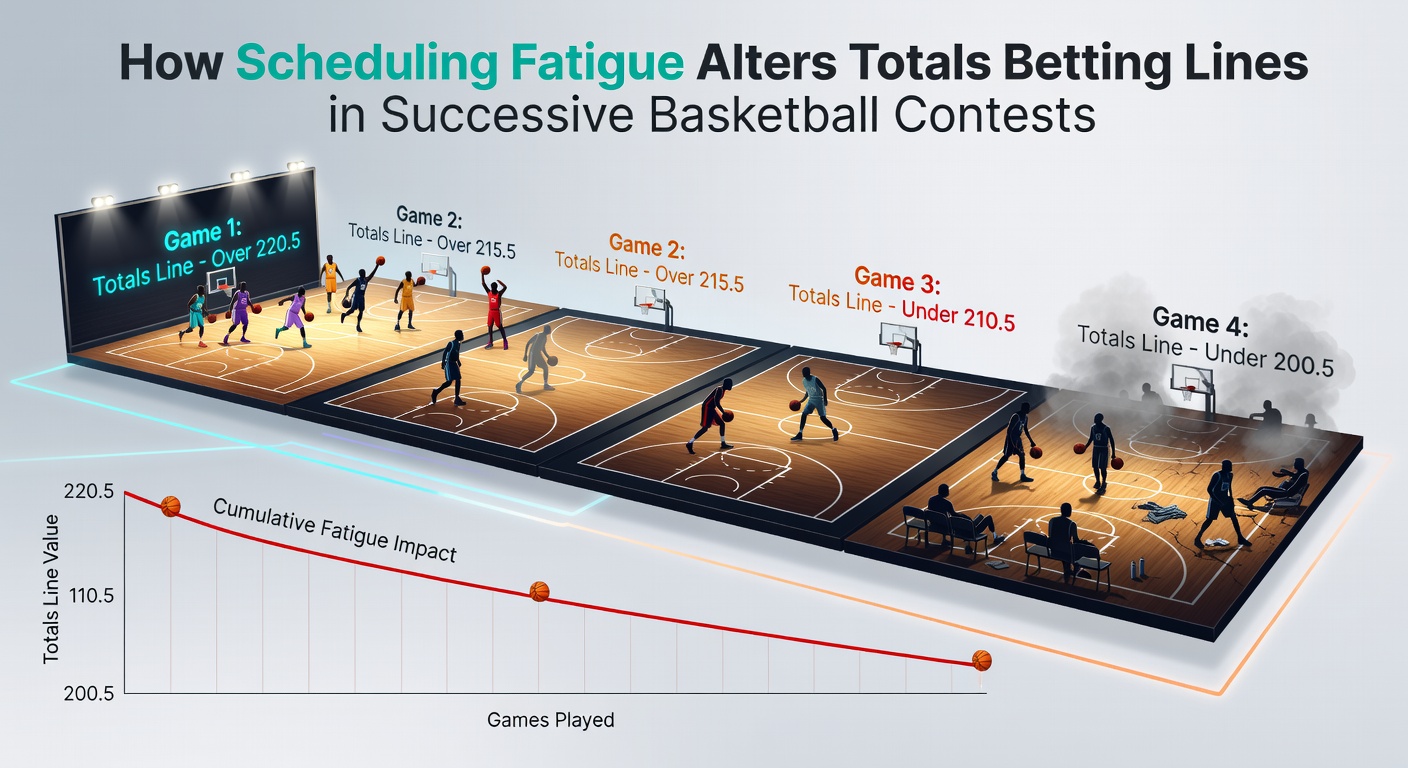
Playoff scheduling introduces distinct dynamics because teams receive more rest days between rounds, which resets fatigue baselines and often elevates scoring compared with regular-season equivalents. Data indicates that totals lines in postseason back-to-backs require separate modeling that accounts for heightened motivation levels offsetting some physical wear. Observers tracking these shifts note that early-round games still exhibit measurable scoring compression when travel between distant arenas occurs on short notice.
Statistical Correlations and Predictive Models
Regression analyses performed on multi-year datasets establish strong negative correlations between rest gaps and combined team points, with coefficients strengthening during high-volume schedule months. Models incorporating player-tracking data on distance covered and sprint frequency improve accuracy when forecasting totals movement, allowing operators to refine lines with greater precision. External studies from institutions such as the National Institutes of Health sports science repository corroborate these findings through controlled examinations of recovery physiology in team sports.
Industry reports from organizations including the Sports Betting Research Association highlight how line setters integrate these variables into automated pricing engines that adjust totals within narrow windows. Patterns emerge most clearly in November and February when teams navigate compressed calendars, producing repeatable edges for those monitoring schedule density metrics closely.
Conclusion
Successive basketball contests generate quantifiable fatigue effects that reshape totals betting lines through reduced scoring outputs and altered game flows. Operators and analysts continue refining their approaches using expanded datasets that capture travel, rest, and performance interactions across entire seasons. These adjustments maintain market efficiency while providing structured opportunities rooted in observable scheduling patterns rather than isolated variables.