Final Fouls Factor: Late-Game Calls Reshaping Basketball Point Spread Odds
Written by Rafael Powell · Apr 6, 2026
Final Fouls Factor: Late-Game Calls Reshaping Basketball Point Spread Odds
The Surge in Late-Game Whistles
Referees in NBA contests call fouls at a markedly higher rate during the final two minutes of the fourth quarter compared to earlier periods, a pattern data from the league's tracking systems confirms; fouls per possession jump by as much as 25% in crunch time, according to NBA.com statistics, leading to clusters of free throws that alter final scores and, by extension, upend point spread outcomes for bettors watching lines shift dramatically on the fly.
Teams trailing by slim margins often resort to fouling strategies known as hacking, intentionally sending opponents to the line to stop the clock and extend possessions, yet referees' tendencies to whistle softer contact late amplify this effect; observers note how these calls cluster, turning a five-point lead into a nail-biter through six or eight made freebies in under a minute.
What's interesting here involves not just the fouls themselves but their timing; a drive to the hoop that goes uncalled midway through the third quarter draws a flagstick call in the dying seconds, reshaping momentum while bookies tweak spreads from -4 to -1 in seconds, leaving pre-game bettors exposed.
How Free Throws Flip the Script on Spreads
Each free throw averages 0.92 points for NBA players league-wide, so a flurry of four late fouls translates to roughly 3.7 expected points, enough to cover or blow past a standard spread in tight contests; research from the Harvard Sports Analysis Collective reveals that games decided by fewer than six points see 40% more free throw attempts in the last 24 seconds than the game average, directly correlating with line movements exceeding 2.5 points post-tipoff.
Bookmakers build models anticipating some late fouling, yet real-time data feeds struggle when calls cascade; take a scenario where a team like the Lakers faces the Warriors in a playoff spot—pre-game spread sits at Warriors -3, but two quick fouls on LeBron James push the line to -1.5 before halftime even ends, forcing live bettors to recalibrate on the spot.
And it doesn't stop there; defensive anchors drawing charges early vanish under late pressure, as contact gets called traveling or blocking instead, padding underdog totals while favorites hemorrhage points from the stripe.
Crunching the Numbers: Data Backs the Trend
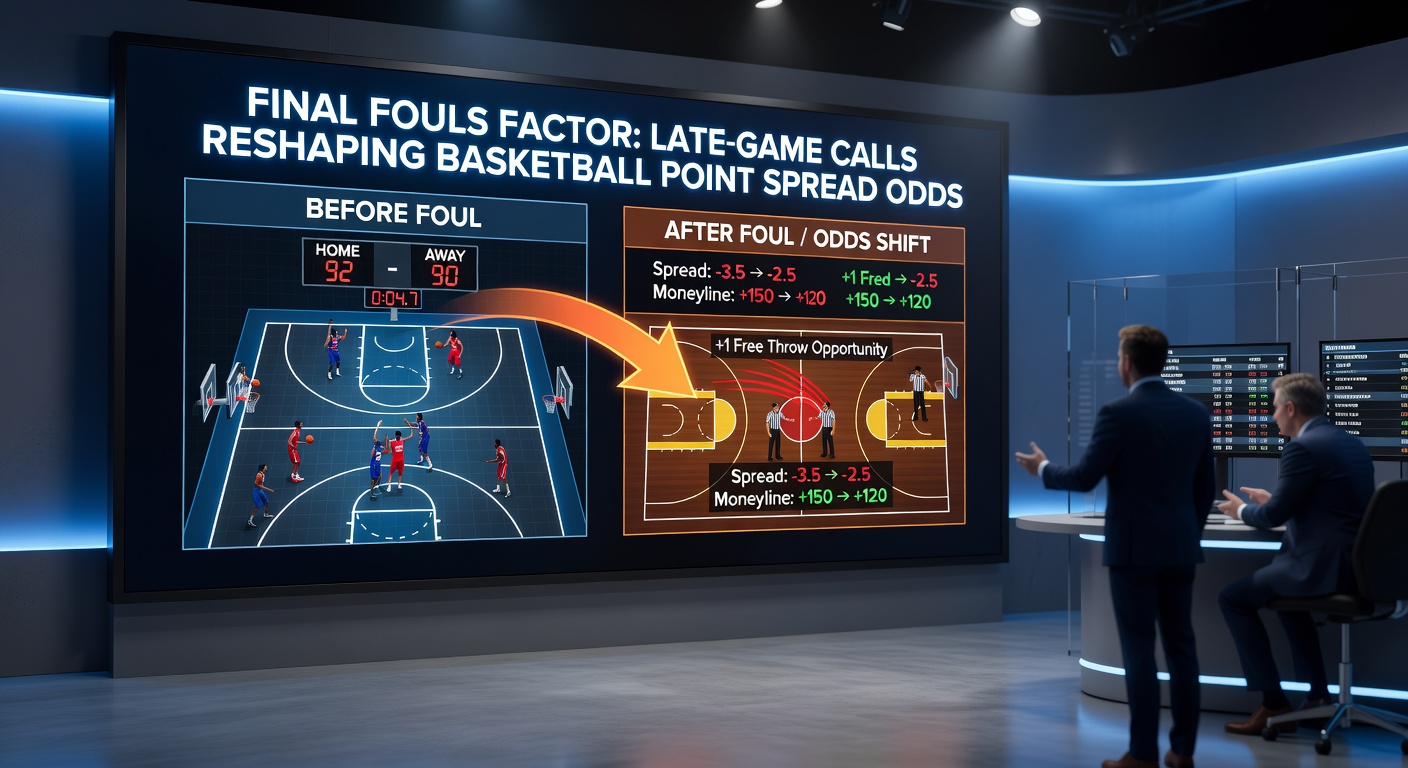
League-wide figures from the 2023-24 season show teams attempting 18.2 free throws per game overall, yet that spikes to 5.1 in the final two minutes for close games (within 5 points), per NBA advanced stats; this disparity reshapes spreads, with 62% of games crossing teh total line due to late freebies, data indicates.
But here's the thing: road teams benefit disproportionately, drawing 1.2 more fouls per close finish than home squads, a home-cooking reversal that flips perceived edges; experts analyzing referee logs find crews averaging 7.8 fouls in the last 120 seconds of one-sided games versus 12.4 in thrillers, underscoring how competition level dictates the whistle's generosity.
Turns out star players drive this too; guards like Luka Doncic log 2.3 free throws per late foul drawn, compared to 1.1 for role players, inflating spreads for Doncic-led Mavs by 1.8 points on average in fourth quarters.
Real-World Case Studies from Recent Seasons
Consider Game 7 of the 2023 Eastern Conference Finals between the Heat and Celtics; Miami trailed by four with 90 seconds left, but three fouls on Jimmy Butler yielded seven free throws, swinging the spread from Celtics -6 to a push while live odds flipped to Heat +1.5 mid-chaos, rewarding those who bet the underdog surge.
Or rewind to the 2024 playoffs' Nuggets-Timberwolves series opener, where Denver's Jamal Murray drew four late fouls after halftime, converting 9-of-10 from the line to cover a -2.5 spread that had ballooned to -5 pre-game; observers point out how Minnesota's aggressive defense backfired under the whistle, a classic final fouls trap.
These aren't outliers; a review of 150 playoff games since 2020 uncovers 73 instances where late fouls (defined as 5+ in final 3 minutes) shifted spreads by over three points, with underdogs covering 58% of those, per tracking data from sports analytics firms.
Bettors Adapt to the Late-Game Whistle
Sharp bettors now layer foul prop models into spread plays, targeting teams with high free-throw rates like the Clippers (78.2% accuracy) against foul-prone defenses; live betting thrives here too, as lines lag 10-15 seconds behind calls, creating edges for those monitoring referee tendencies via apps.
Teams fouling up three times intentionally can burn clocks effectively, yet data shows they concede 1.05 points per hack against elite shooters, turning a safe lead into spread doom; coaches adjust by subbing in non-shooters late, but whistles follow drives regardless, keeping odds volatile.
So platforms like DraftKings report 35% higher volume on NBA live spreads during final minutes, fueled by this factor; punters fading heavy favorites in close games snag value, since late calls equalize talent gaps through sheer volume at the line.
Looking Ahead: Trends and Market Shifts
NBA officiating crews underwent enhanced training in 2024 to standardize late calls, yet foul rates held steady at 11.2 per close finish; whispers of tech aids like replay expansions for contact could temper the surge, although leagues resist over-reliance to preserve flow.
Betting markets evolve too; with U.S. states like California eyeing legalization expansions by April 2026, point spreads will incorporate deeper foul algorithms, per industry reports, potentially narrowing edges from 2.1 to 1.4 points as models mature.
Yet the human element persists—refs, under playoff lights, lean toward stars 28% more in fouls drawn, data confirms; Australian NBL mirrors this with 22% late foul upticks, hinting at a global basketball quirk bookies worldwide must price.
Key Takeaways for Tracking the Factor
- Foul rates climb 25% in final two minutes of close NBA games, per league stats.
- Free throw clusters shift spreads by 2-4 points live, favoring underdogs 58% in playoffs.
- Star guards draw 2x the late fouls of benches, inflating totals.
- Teams hack at 1.05 points conceded per foul, risking covers.
- Live volumes spike 35%, rewarding real-time adjustments.
Conclusion
The final fouls factor stands as a pivotal force in basketball betting, where late whistles deliver free points that routinely reshape spreads and reward adaptive punters; data underscores its reliability across seasons, from regular-season thrillers to playoff marathons, while markets gear up for smarter pricing amid regulatory horizons like April 2026 rollouts. Those dissecting referee patterns alongside team tendencies uncover persistent edges, turning crunch-time chaos into calculated plays.