How Court Surface Transitions Shape Doubles Team Dynamics Across ATP Tournaments
Written by Klara Hoffmann · Aug 8, 2026
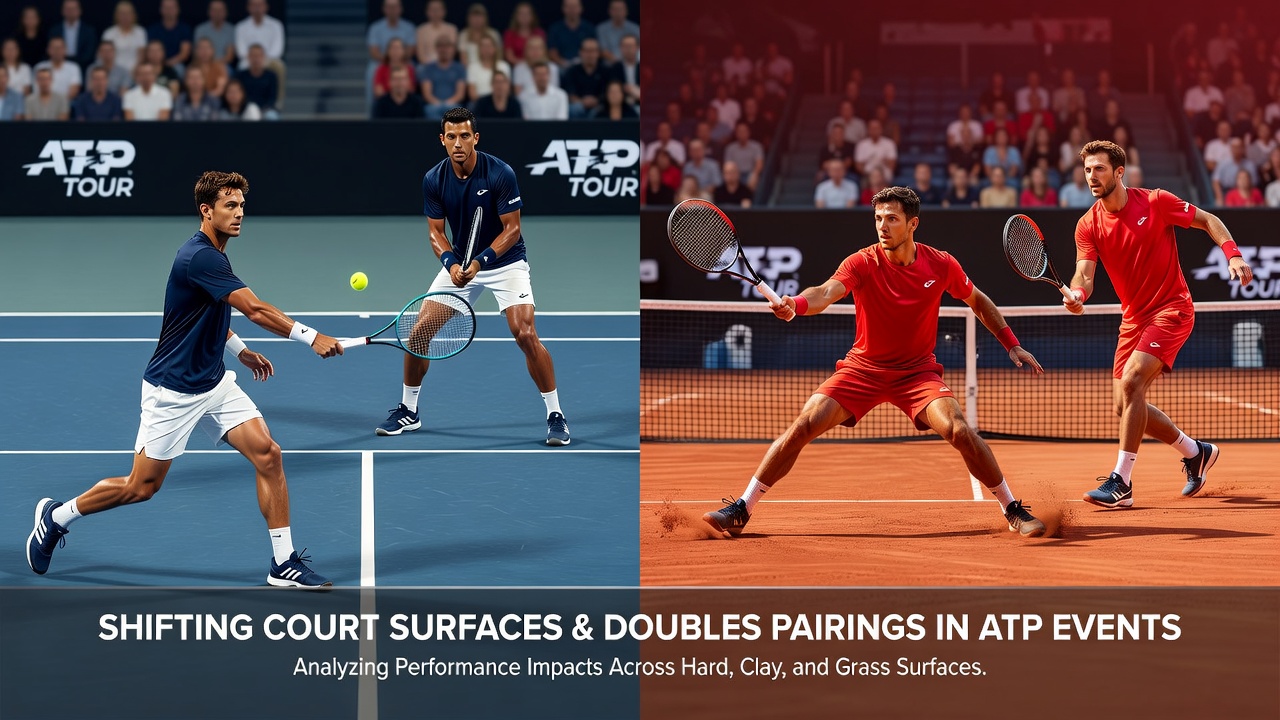
How Court Surface Transitions Shape Doubles Team Dynamics Across ATP Tournaments
ATP events rotate through hard courts, clay, and grass throughout the season, and these shifts directly alter how doubles pairs construct their strategies and lineups. Data from the ATP Tour shows that surface characteristics such as ball speed, bounce height, and friction levels change rally lengths and shot selection patterns in measurable ways. Teams adjust serve angles, net positioning, and return depths to match the conditions, while tournament organizers finalize draws based on historical performance records on each surface.
Surface Characteristics and Their Measurable Impact
Hard courts produce medium to fast ball speeds with consistent bounce, allowing doubles pairs to rely on powerful first serves and quick net approaches. Clay courts slow the ball and create higher bounces, which extends rallies and favors pairs that excel at topspin lobs and defensive baseline play. Grass courts generate the fastest speeds and lowest bounces, rewarding teams with strong serve-and-volley tactics and precise angle play at the net. Researchers at the International Tennis Federation have documented these differences through ball-tracking technology across multiple seasons.
August 2026 features several ATP events transitioning from European clay to North American hard courts, including the lead-up tournaments to the US Open. Players and coaches review surface-specific statistics to determine optimal pairings, since data indicates that certain combinations achieve higher win rates when surfaces change. Observers note that left-handed servers often gain advantages on grass due to wider serve angles, while right-handed net players perform strongly on clay where extended exchanges reward volley placement over raw power.
Adaptations in Pairing Selections
Coaches examine past results when selecting partners for specific surfaces. Pairs with complementary skill sets, such as one strong server paired with an effective returner, appear more frequently on hard courts where point construction happens quickly. On clay, teams featuring two baseline-oriented players become common because longer rallies reward endurance and consistency over aggressive net rushes. Grass tournaments see increased selection of serve-and-volley specialists who can close points rapidly before opponents settle into rhythm.
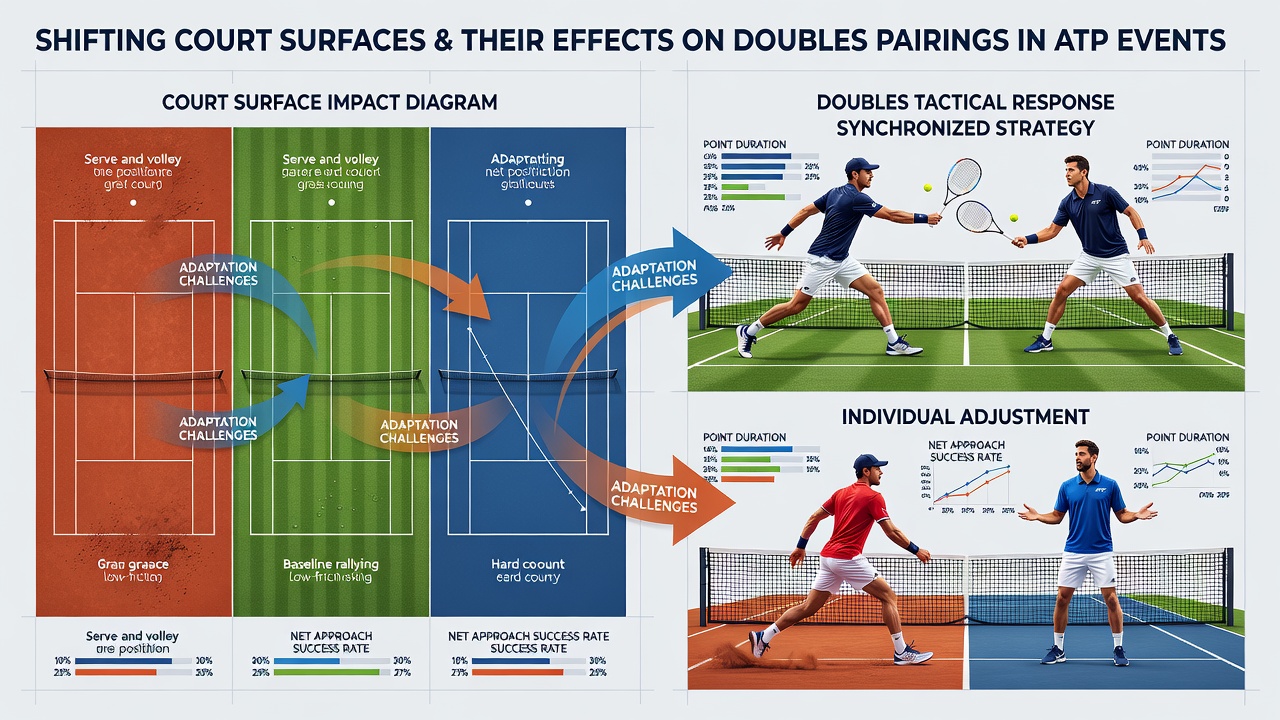
Statistics compiled by Tennis Australia across recent seasons reveal that doubles teams change their formation usage based on surface. Australian doubles pairs, for instance, shift from Australian formation on faster surfaces to conventional side-by-side positioning on slower clay. European teams demonstrate similar adjustments according to data from the European Tennis Federation, which tracks formation success rates by court type. These patterns influence how tournament directors seed doubles draws and how players request practice court allocations ahead of events.
Tournament Scheduling and Pair Preparation
ATP calendars place clay events in spring and early summer, followed by grass in late June and early July, then hard courts from mid-July onward. This sequence requires doubles pairs to adapt quickly between surfaces, often within weeks. Training regimens change accordingly, with additional focus on movement patterns and recovery protocols suited to each surface. Medical staff monitor player workloads because clay demands more lateral movement while grass requires explosive forward bursts.
Studies from the University of Queensland's tennis research group have examined how doubles partners communicate and coordinate under varying surface conditions. Their findings indicate that verbal and non-verbal cues become more critical on slower surfaces where rallies last longer and strategic adjustments occur mid-point. Faster surfaces reduce the time available for such communication, leading pairs to rely on pre-established patterns developed during practice sessions.
Performance Data Across Surfaces
ATP records demonstrate that certain doubles teams maintain higher success rates when they compete on their preferred surfaces. Win percentages for net-rushing pairs drop on clay compared with grass, while baseline-heavy teams show improved results on slower courts. These trends appear consistently across Grand Slam and ATP 500 events, allowing analysts to predict likely outcomes when surface transitions occur. Tournament officials use this information when allocating practice times and determining match schedules to accommodate recovery needs between surfaces.
Conclusion
Surface transitions continue to influence doubles pairings throughout the ATP calendar, with teams adapting formations, tactics, and partner selections according to documented performance patterns. August 2026 events highlight these dynamics as players move from clay to hard courts ahead of major tournaments. Data from multiple governing bodies and research institutions supports the observation that successful doubles teams prepare surface-specific strategies well in advance of each event.