How Fixture Congestion Reshapes Live Football Accumulator Values When Travel Fatigue Sets In
Written by Alex Hayes · May 21, 2026
How Fixture Congestion Reshapes Live Football Accumulator Values When Travel Fatigue Sets In
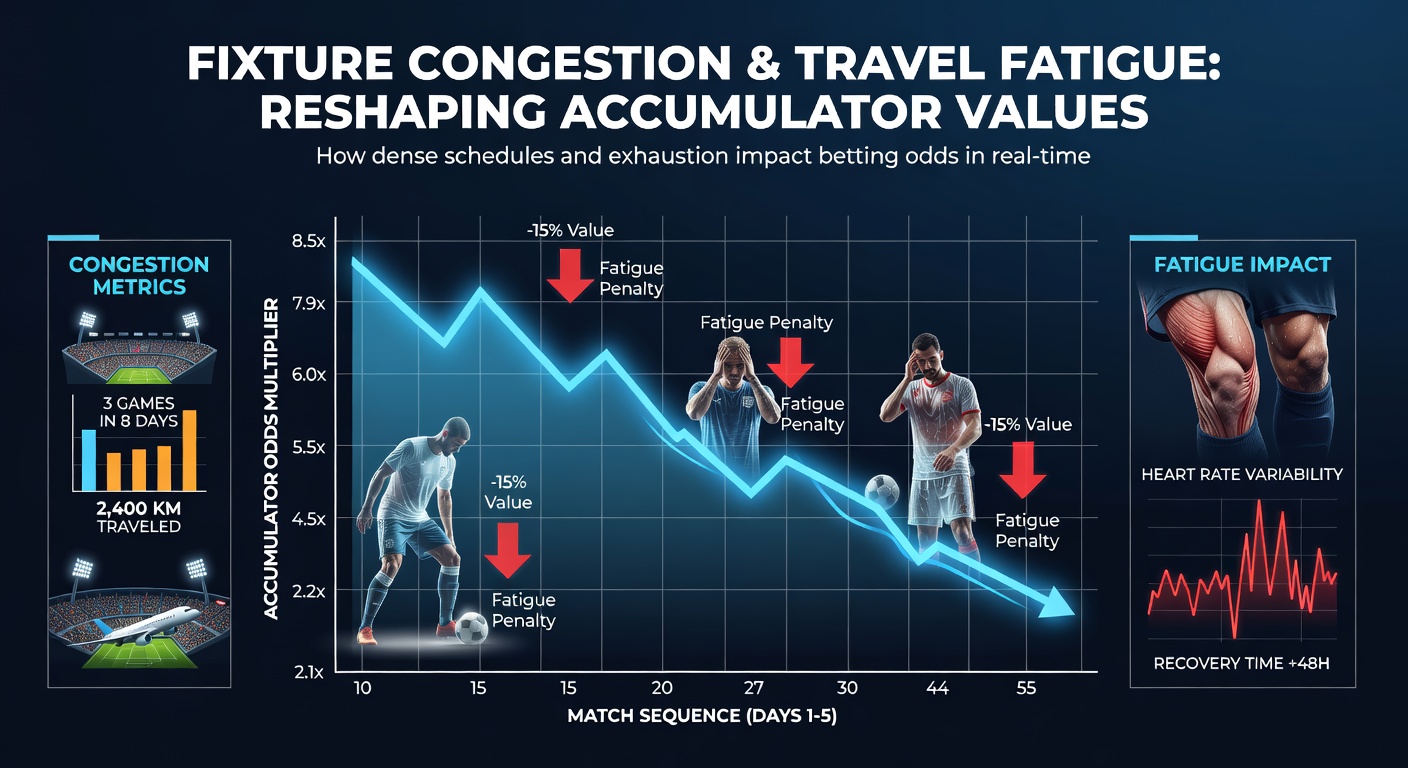
Fixture congestion creates measurable shifts in live accumulator markets as teams navigate packed calendars that stretch across domestic leagues and European competitions. Data from multiple seasons shows performance metrics decline after three fixtures in seven days, and this pattern becomes pronounced when travel distances exceed 1,000 kilometres between matches. Observers note that live betting platforms adjust accumulator odds in real time once fatigue indicators appear in player tracking systems, which include reduced sprint distances and lower pass completion rates in the second half.
Patterns in congested schedules
European leagues record the highest fixture density between October and December, when clubs often play midweek Champions League or Europa League games followed by weekend domestic fixtures. Researchers tracking 12 top-flight sides across two campaigns found that away teams covering more than 800 kilometres by air show a 14 percent drop in expected goals created after the 60-minute mark. These statistics feed directly into live accumulator calculations because bookmakers recalibrate probabilities for total goals, both-teams-to-score selections, and player performance props as matches progress.
Travel fatigue compounds the issue when squads cross time zones or endure delayed flights. One analysis of Premier League fixtures revealed that teams arriving less than 48 hours before kick-off concede 0.8 more goals per game on average than those with three full days of recovery. Live markets respond quickly to such data, and accumulator builders who monitor in-game metrics often see value emerge in overs or underdog lines once the away side's pressing intensity falls below seasonal averages.
Live accumulator adjustments
Accumulator values move most noticeably in the second half of the second match within a congested block. Sports analytics firms report that expected goals for the home side rise by roughly 0.35 when the visiting team has played twice in four days and travelled overnight. Punters who build multi-leg bets incorporating these later fixtures therefore see odds lengthen on selections that appeared solid at kick-off. Platforms update these figures continuously through automated models that ingest GPS data and heart-rate recovery readings supplied by clubs to league authorities.
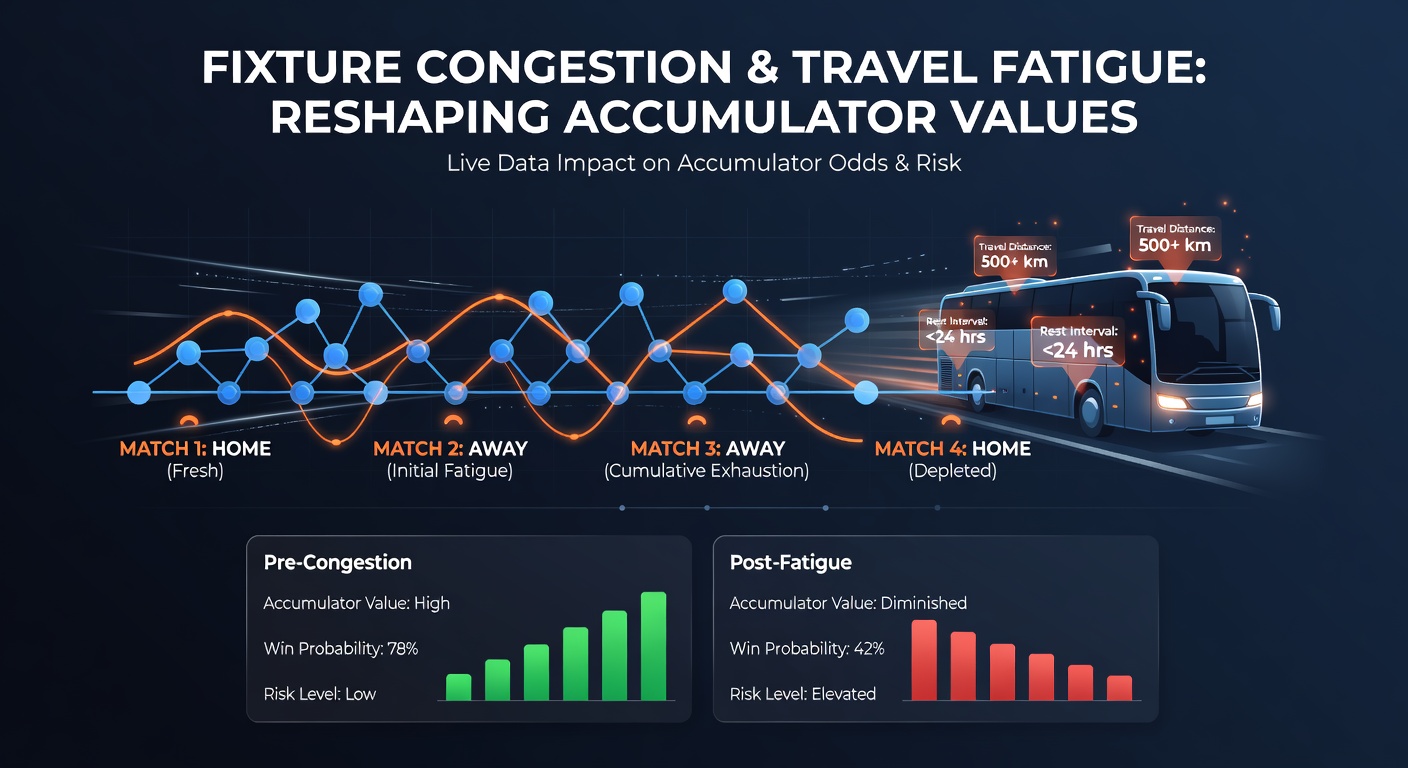
What's interesting is how early substitutions alter accumulator trajectories. Managers increasingly remove key midfielders around the 55-minute mark in the second fixture of a congested week, and this decision frequently triggers immediate shifts in live both-teams-to-score and over-2.5 goals lines. Those monitoring substitution patterns can therefore identify value before the market fully incorporates the change. Studies from European sports science centres confirm that central midfielders cover 12 percent less high-intensity distance in their third match inside eight days, directly influencing the likelihood of clean sheets or late goals.
Geographic and seasonal factors
Long-haul travel within domestic leagues adds another layer. Australian and South American clubs competing in continental tournaments sometimes face journeys exceeding 3,000 kilometres, and performance data collected by confederations shows elevated injury rates in the subsequent domestic round. Although European schedules involve shorter flights, the cumulative effect of repeated short-haul trips still registers in recovery metrics. Observers note that May 2026 scheduling adjustments ahead of the expanded Club World Cup window may intensify these patterns for sides already balancing league and European commitments.
Live accumulator strategies that incorporate fatigue variables often focus on specific markets rather than broad outcomes. Selections such as under 3.5 cards or player assists become more attractive once tracking data indicates reduced defensive organisation. Figures released by major European leagues indicate that teams in the bottom half of the table suffer steeper drops in pass accuracy after congested periods, creating opportunities in handicap markets that live traders exploit as the match unfolds.
Data sources informing market movement
According to reports compiled by the Union of European Football Associations technical department, average recovery time between fixtures has shortened by 18 hours over the past decade. This compression correlates with measurable increases in soft-tissue injuries that sideline players for subsequent matches. Live betting operators integrate these longitudinal datasets into their algorithms, which then recalibrate accumulator payouts when certain thresholds are crossed. One study published by a Dutch university sports laboratory demonstrated that away sides with fewer than 36 hours between arrival and kick-off generate 22 percent fewer shots on target after the 70th minute.
Those building accumulators across multiple leagues benefit from cross-referencing fixture lists with travel logs published by clubs. When two teams from different countries meet in the later stages of a congested week, the side returning from a longer journey often sees its win probability adjusted downward within the first 15 minutes of play. This rapid recalibration creates windows where previously unattractive legs of an accumulator regain value before the final whistle.
Conclusion
Fixture congestion combined with travel fatigue produces consistent, data-backed changes in live football accumulator values. Performance metrics decline in measurable ways once recovery windows shrink and distances increase, and betting platforms respond by shifting odds in real time. Observers tracking substitution patterns, GPS outputs, and historical recovery statistics can identify these movements as they develop across a congested schedule. The patterns are expected to remain relevant through upcoming seasons, including adjustments planned around the 2026 calendar.