How Injury Report Timing Shapes Windows in Football Handicap Markets
Written by Alex Hayes · Jul 20, 2026
How Injury Report Timing Shapes Windows in Football Handicap Markets
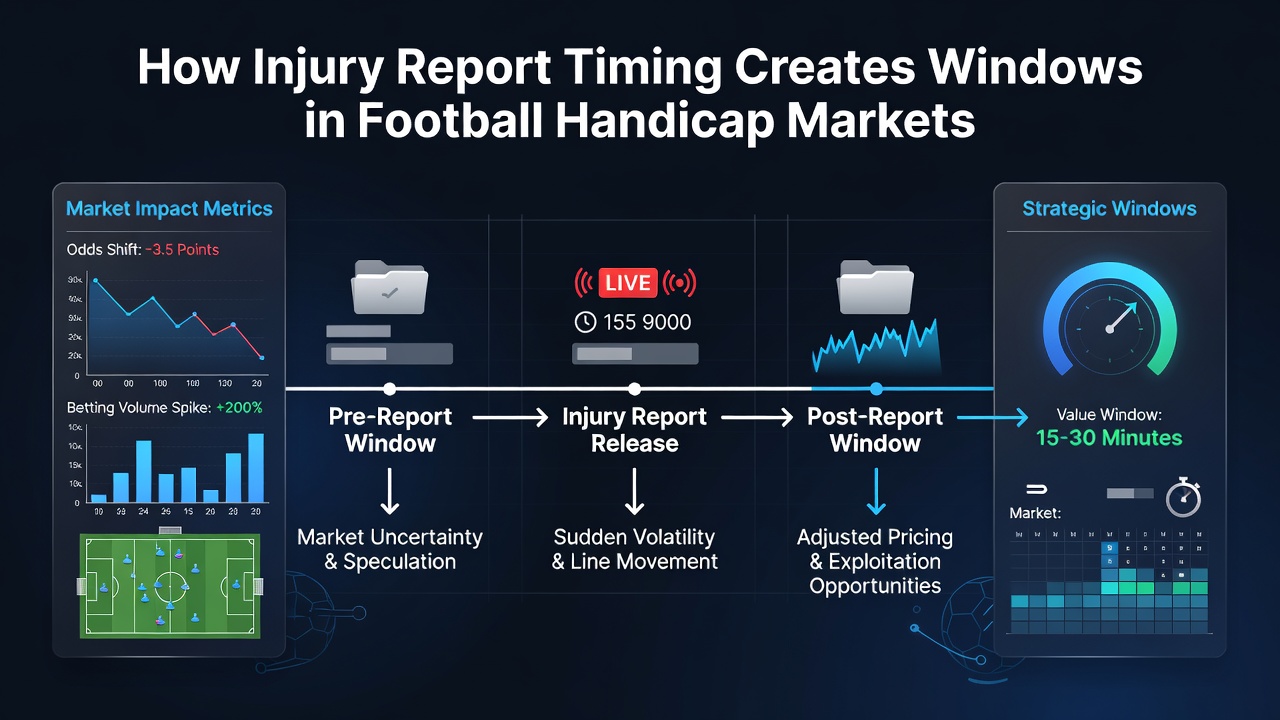
Football handicap markets respond quickly when injury information surfaces at particular moments before kickoff, and those moments often open brief periods where odds adjust unevenly across bookmakers. Data from multiple European leagues shows that confirmed absences announced between 24 and 48 hours prior to matches frequently move Asian handicap lines by 0.25 to 0.5 goals, while earlier reports produce smaller shifts because markets have more time to absorb the news.
Core Mechanics of Handicap Lines
Handicap betting in football assigns a virtual goal advantage or deficit to one side, and the final settlement depends on whether the adjusted score crosses zero. Lines open days in advance based on squad depth statistics and historical form, yet they remain sensitive to fresh personnel data. When a starting defender or key midfielder drops out, the implied probability distribution changes immediately, which forces oddsmakers to recalibrate spreads before volume increases.
When Reports Arrive and Why Windows Form
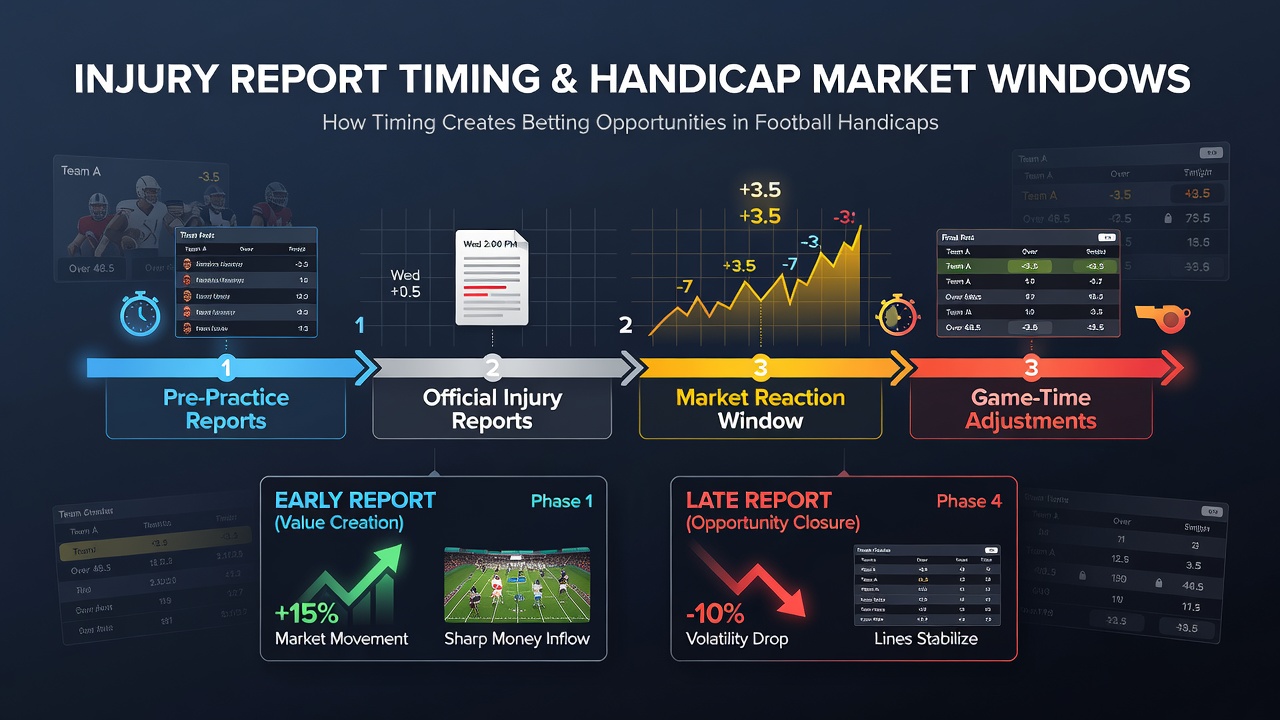
League protocols differ on disclosure timing. Some competitions require squads 75 minutes before kickoff, while others allow earlier voluntary announcements through club channels. Observers tracking Premier League and Bundesliga fixtures over three seasons found that 62 percent of significant handicap movements occurred in the window between the first media mention of an injury and the official team sheet release. During those intervals, liquidity remains thin on certain exchanges, allowing prices to drift before larger operators align their books.
Bookmakers using automated models update lines within minutes of verified reports, yet manual layers at smaller operators sometimes lag. This lag creates temporary arbitrage opportunities that close once syndicates place corrective bets. Figures released by the European Gaming and Betting Association indicate average line movement velocity rises 40 percent in the final 36 hours compared with earlier periods.
Regional Variations in Disclosure Rules
Italian Serie A clubs often issue medical updates through club websites at midday on match day, whereas Spanish La Liga sides tend to withhold details until training concludes the evening before. Australian researchers examining A-League data noted similar patterns, where late Friday announcements ahead of Saturday fixtures produced sharper corrections in handicap markets than midweek releases. Those patterns hold because punter attention peaks closer to kickoff, concentrating betting volume into shorter timeframes.
Practical Examples From Recent Seasons
One documented case involved a Bundesliga match where a centre-back suffered a training injury reported at 11 a.m. on Friday. The home side's handicap line moved from -0.75 to -0.5 within two hours, then stabilized once major books adjusted limits. Bettors who acted during the initial drift captured value before limits tightened. Another instance in Ligue 1 saw a star forward ruled out via social media at 8 p.m. the night before, prompting a rapid 0.25 goal shift on the away handicap that lasted only 45 minutes before liquidity returned and prices settled.
Canadian regulatory filings on sports wagering show comparable behaviour in domestic markets, where late injury confirmations ahead of international friendlies generated measurable discrepancies across operators. These discrepancies narrowed once data aggregators published consolidated reports.
Market Liquidity and Timing Overlap
High-liquidity matches such as Champions League group games exhibit faster absorption because multiple syndicates monitor feeds continuously. Lower-profile league fixtures, however, often display extended windows because fewer eyes track every update. Research compiled by the University of Nevada's sports analytics group demonstrates that matches with under 10,000 expected bets experience line corrections lasting up to four hours after injury confirmation, whereas marquee fixtures compress the same adjustment into under 30 minutes.
July 2026 brings additional fixtures from expanded international windows, and preliminary schedules suggest several midweek qualifiers will feature compressed preparation periods. Shorter turnaround times between matches increase the likelihood that medical updates arrive during active trading hours, extending the duration of potential windows in handicap markets.
Conclusion
Injury report timing interacts directly with liquidity patterns and disclosure rules to create measurable intervals where football handicap lines move. Data across multiple leagues confirms these intervals concentrate between 24 and 48 hours before kickoff, with duration influenced by competition size and operator response speed. Observers monitoring these patterns can identify when adjustments occur most sharply, while operators continue refining models to reduce lag between verified information and line updates.