Observing Totals Line Adjustments Across Books When Starters Encounter Foul Trouble Late in Basketball Games
Written by Rafael Powell · Jun 25, 2026

Observing Totals Line Adjustments Across Books When Starters Encounter Foul Trouble Late in Basketball Games
Starters accumulating fouls in the fourth quarter often prompt coaches to adjust rotations, which alters game pace and scoring output. Data from recent NBA seasons shows these situations frequently coincide with shifts in totals lines on sportsbooks, as operators recalibrate projected points based on reduced playing time for high-usage players. Observers note that totals markets react differently depending on the platform, with some books adjusting within seconds of foul calls while others lag until substitution patterns emerge.
Game Flow Changes Triggered by Foul Trouble
When a starter reaches foul trouble, teams typically slow their offensive tempo to protect the player or insert defensive specialists. League tracking data indicates average possessions per game drop by 4 to 7 percent in such scenarios during the final period, directly influencing over/under expectations. Researchers analyzing play-by-play logs have found that points per possession also decline modestly because teams favor half-court sets over transition opportunities.
Coaches respond in varied ways, yet patterns appear across multiple franchises. One documented approach involves switching to smaller lineups that prioritize spacing, which can offset some scoring loss but rarely restores the original projected total. Another common adjustment limits minutes for the affected player entirely, shifting usage to bench contributors who post lower efficiency ratings on average.
Platform-Specific Line Movements
Betting platforms process these developments at different speeds because each maintains distinct risk models and liquidity pools. Major operators in the United States, including those licensed in Nevada, often move totals lines by half a point to one point within the first minute after a key foul, according to records maintained by the Nevada Gaming Control Board. European-facing books sometimes delay adjustments until additional evidence, such as confirmed substitutions, appears on the broadcast feed.
Line movement magnitude also varies by market depth. High-volume platforms absorb larger wagers without shifting odds immediately, whereas smaller books react faster to maintain balanced books. Data compiled during the 2025-2026 season revealed that totals on one major app drifted downward by 2.5 points on average when two starters from the same team entered foul trouble before the final six minutes, while another platform required nearly three minutes to reflect a comparable adjustment.
Cross-Platform Tracking Methods
Analysts monitor multiple apps simultaneously to identify discrepancies that arise during live play. Software tools aggregate real-time odds feeds, allowing observers to flag instances where one book has already lowered its total while others remain unchanged. These gaps tend to narrow within five minutes as information propagates across the market.
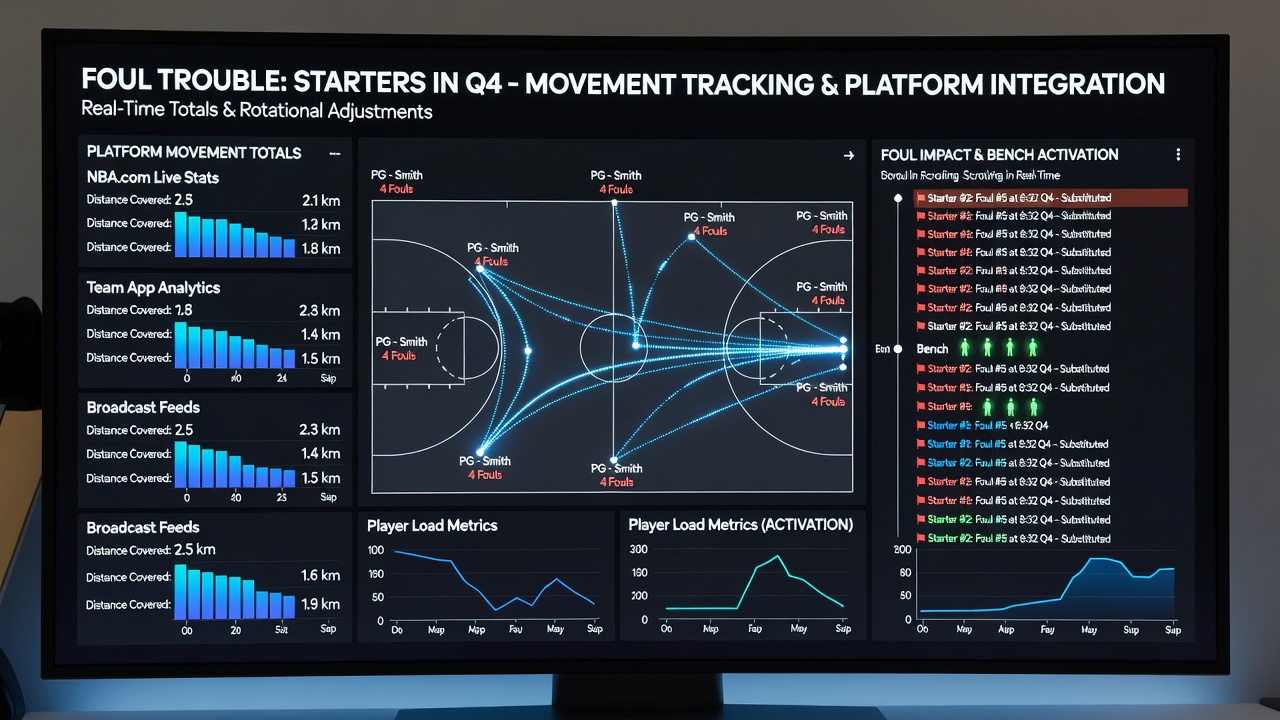
Historical comparisons help contextualize current movements. During June 2026 playoff contests, several series featured repeated fourth-quarter foul trouble situations that produced consistent downward pressure on totals across most regulated markets. Figures released by the American Gaming Association showed increased betting handle on unders in those specific windows, aligning with observed pace reductions.
External Data Sources and Verification
Verification relies on official play-by-play records and substitution logs rather than anecdotal reports. University-led studies, including work published through the University of British Columbia's sports analytics group, have quantified how foul trouble correlates with changes in effective field goal percentage during closing minutes. These findings provide baseline expectations that platforms incorporate into their models.
Additional context comes from industry reports produced by groups such as the European Gaming and Betting Association, which track aggregated market behavior across jurisdictions. Such reports document that totals markets exhibit greater volatility when multiple high-minute players share foul trouble, yet the direction of movement remains predominantly downward in documented cases.
Conclusion
Tracking totals movements requires attention to both on-court personnel changes and the differing response times of individual platforms. Available data from regulated markets demonstrates measurable line adjustments tied directly to fourth-quarter foul trouble, with the scale of those adjustments depending on the operator's risk parameters and market liquidity. Continued monitoring of these patterns offers factual insight into how basketball betting markets incorporate late-game developments.