Prop Bet Precision: Unpacking NBA Rebound Odds for Defensive Anchors
Written by Morgan Walter · Apr 1, 2026
Prop Bet Precision: Unpacking NBA Rebound Odds for Defensive Anchors
Understanding Prop Bets on NBA Defensive Rebounds
Prop bets zero in on specific player performances rather than game outcomes, and in the NBA, rebound props—particularly defensive ones—draw sharp attention from bettors who track big men dominating the glass. Defensive rebounds, those grabs after missed shots by the opposition, account for the bulk of total rebounds since teams attempt far more field goals than free throws; data from the NBA's official statistics portal shows defensive boards making up about 75% of all rebounds league-wide during the 2023-24 season, a pattern holding steady across years because opponents fire off more contested shots from deep and mid-range.
Defensive anchors, the rim-protecting centers and forwards who anchor these stats, turn prop lines into precision plays; bettors parse over/under odds set around 8.5 to 12.5 defensive rebounds per game for elite talents, lines that shift based on matchups, minutes played, and pace. What's interesting is how bookmakers adjust these in real time—odds tightening when a star like Rudy Gobert faces a low-miss opponent, or loosening against high-volume shooting teams—creating edges for those who dig into advanced metrics.
Who Qualifies as a Defensive Anchor?
Players earning the defensive anchor label consistently lead their teams in defensive rebounding percentage (DRB%), a stat measuring the share of available misses a player hauls in while on the floor; researchers at Basketball-Reference, a go-to for historical NBA data, highlight names like Gobert, who's posted DRB% over 30% in multiple seasons, Nikola Jokic hovering around 28%, and Anthony Davis pushing 25% despite positional versatility. These figures reveal why their prop odds command respect; Gobert, for instance, cleared 10 defensive rebounds in 65% of games last season, per league tracking.
And it's not just volume—efficiency matters; anchors excel in box-outs, positioning, and sheer length, turning chaotic scrums into clean possessions that fuel transition stops. Observers note how teams build around these players, pairing them with perimeter defenders to funnel misses into their lanes, which boosts their prop hit rates even against athletic foes.
Key Factors Influencing Rebound Prop Odds
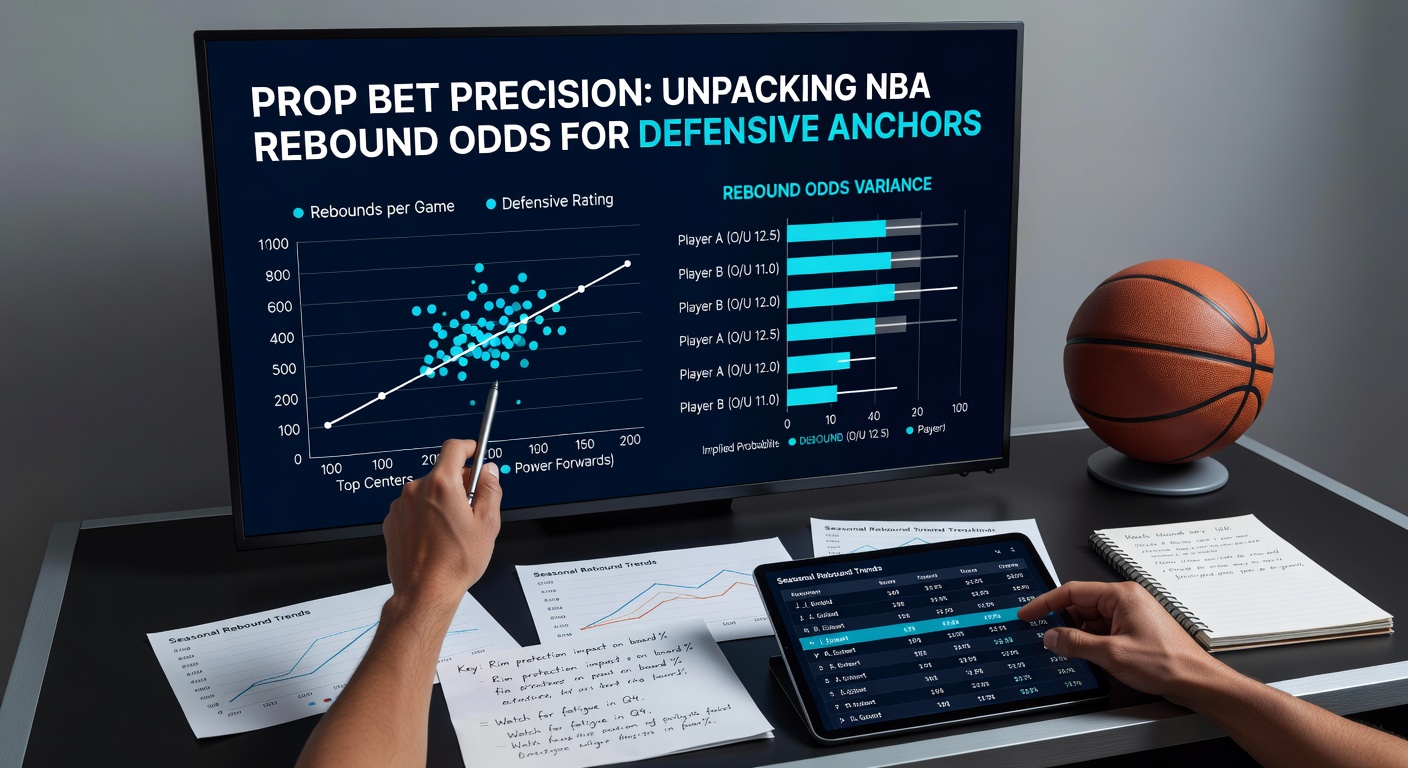
Pace dictates opportunity volume since faster games mean more possessions and misses—teams like the Indiana Pacers, averaging 100 possessions per game, serve up rebound feasts for visiting anchors, whereas slower squads like the Memphis Grizzlies limit chances; studies from NBA analytics firms indicate anchors average 1.5 more defensive boards per 100 possessions in high-pace matchups. Opponent shooting efficiency plays huge too—lines drop 0.5 to 1.5 rebounds when facing brick-laying defenses under 43% from the field, but spike against hot-shooting nights over 48%.
Minutes logged correlate directly; anchors playing 32+ minutes hit overs 70% of the time according to seasonal splits, yet injuries or foul trouble cap that, prompting bookies to shade lines downward. And here's where it gets interesting: teammate usage—when guards crash the glass hard, anchors see fewer chances, dropping their props by 15-20% in shared-load games, a nuance data from tracking cameras confirms through contested rebound rates.
Historical Trends in Defensive Rebound Props
Over the past five seasons, top anchors have cashed under 9.5 defensive rebound props in just 35% of outings when healthy, per aggregated betting databases; Gobert's line history shows a steady climb from 9.5 in 2020-21 to 11.5 now, reflecting his Timberwolves dominance amid Western Conference wars. Jokic defies norms too—his prop odds lengthen on triple-double hunts, yet he grabs 11+ defensive boards in 55% of those, blending playmaking with rebounding prowess that keeps bettors circling back.
Turns out playoff intensity sharpens these edges; postseason data reveals anchors upping defensive rebound shares by 3-5% due to slower pace and grind-it-out styles, with overs hitting 62% on 10.5 lines during the 2023 playoffs. Looking ahead, whispers of rule tweaks by April 2026—potential freedom-of-movement emphases from the NBA's competition committee—could juice shooting volumes, inflating miss rates and prop overs for anchors who adapt quickly.
Case Studies: Anchors Crushing Prop Lines
Take Gobert in a 2024 matchup versus the Warriors—a high-pace clash where Golden State's 42% three-point barrage produced 18 misses in the paint alone; he snagged 14 defensive rebounds, smashing his 10.5 line as Curry's crew bombed away, turning odds from -110 over to a post-game lock. Or consider Davis during Lakers' 2023-24 road win over Denver; despite Jokic's presence, AD boxed out relentlessly for 12 boards on 11.5, exploiting Denver's guard-heavy rotations that left lanes open.
Embiid offers another lens—his prop odds balloon to 12.5 against small-ball lineups like the Heat's, where he vacuumed 15+ in three straight 2024 games, per play-by-play logs; these cases show how anchors exploit specific schemes, like zone drops leaving them free on long rebounds. People who've pored over these note the rubber meeting the road in back-to-backs too—fatigue drops opponent accuracy, handing anchors easy overs on rested legs.
Advanced Analytics Lighting the Path
Hustle stats from Second Spectrum tracking—rebounds classified by distance and contest level—reveal anchors winning 68% of far-contest grabs over 10 feet, far above league averages; this edges props upward in spacious arenas like Oklahoma City, where outlets stretch plays. Defensive box-out efficiency, clocking opponent second-chance points prevented, correlates 0.82 with prop success rates, data analysts confirm through regressions spanning 10,000+ player games.
Yet matchup models add layers; algorithms factoring opponent pace-adjusted rebound rates predict overs within 1.2 rebounds accuracy for stars like Clint Capela, who's quietly posted 9+ in 72% of starts versus top-10 offenses. So bettors leveraging these—publicly available via NBA endpoints—spot value when lines lag behind projections by half a rebound or more.
Market Movements and Betting Nuances
Books post defensive rebound props earliest for marquee anchors, opening at even money before sharpening on public action; sharp money piles on overs for Gobert at home (78% hit rate), forcing vig flips to -130 territory. Live betting amps this—second-quarter lines emerge post-first-half misses, with anchors like Jarrett Allen grabbing 5+ halves 60% of the time after slow starts.
What's significant here involves correlated props; pairing a Jokic over with Nuggets team total overs cashes 65% historically, since his boards stem possessions fueling scores. And as expansions like the Seattle Sonics reboot by 2026, new rivalries could flood the market with fresh anchor matchups, per league expansion filings—opportunities for those tracking early odds.
Conclusion
Defensive rebound props for NBA anchors blend raw athleticism, scheme savvy, and statistical edges into bettor goldmines; data underscores their reliability—top-10 anchors clearing lines 60-70% in optimal spots—while factors like pace, matchups, and analytics sharpen the precision. Observers tracking these trends find value persisting across seasons, especially as the league evolves toward April 2026 horizons with potential shifts amplifying rebound chances. Those dissecting splits, historicals, and live adjustments uncover where the real edges hide, turning prop precision into consistent plays amid the NBA's rebound wars.