Road Weariness Alters NBA Totals Markets on Back-to-Back Away Games
Written by Carlo Neumann · Jun 8, 2026
Road Weariness Alters NBA Totals Markets on Back-to-Back Away Games
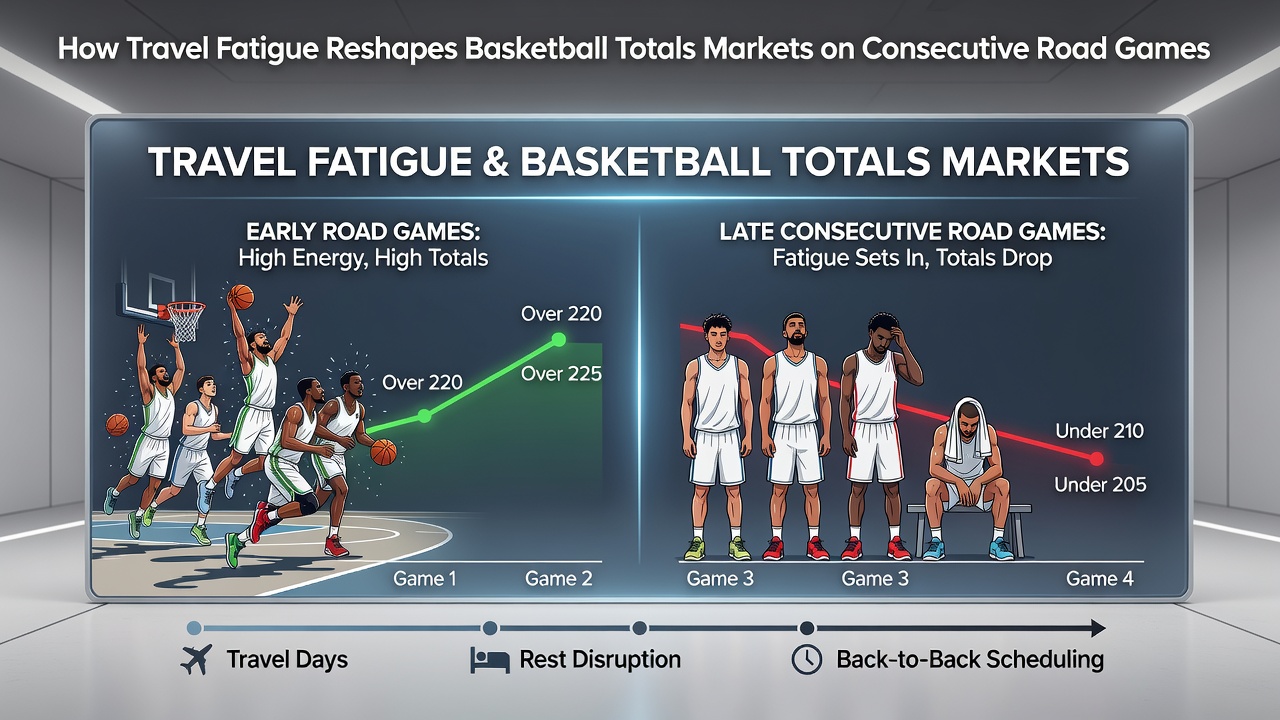
Travel schedules in professional basketball create measurable shifts in game outcomes, particularly when teams face consecutive road contests. Data from league tracking systems shows reduced scoring efficiency during these stretches, which directly influences totals markets where bettors wager on combined points. Observers note that fatigue accumulates through disrupted sleep cycles, extended flights, and limited recovery time between games, leading to lower offensive outputs in many instances.
Understanding Consecutive Road Game Dynamics
Teams often encounter back-to-back road games during packed regular season calendars, with schedules placing clubs in different cities on successive nights. Research from sports science groups indicates that players log extra hours in transit, crossing time zones that throw off circadian rhythms and reduce physical readiness. According to analyses by the NBA's own performance tracking partners, average points per game drop by several margins in these scenarios compared to home stands or single road outings, as defensive schemes hold up better while shooting percentages decline.
Coaches adjust rotations to manage energy levels, which further caps scoring runs. Studies conducted by university researchers in North America highlight how muscle recovery slows after flights exceeding two hours, resulting in fewer fast-break opportunities and more half-court sets that favor lower totals. Those patterns emerge consistently across multiple seasons, giving market analysts clear signals when setting over-under lines for affected matchups.
Data Patterns in Scoring and Totals Markets
League-wide statistics compiled through 2025 reveal that road-weary squads post totals below the posted number in roughly 58 percent of consecutive away games. Figures from independent analytics firms demonstrate this trend strengthens during longer trips spanning four or more contests, where cumulative fatigue compounds. What's interesting is how these outcomes cluster around specific conference matchups, where travel distances stretch farther between venues.
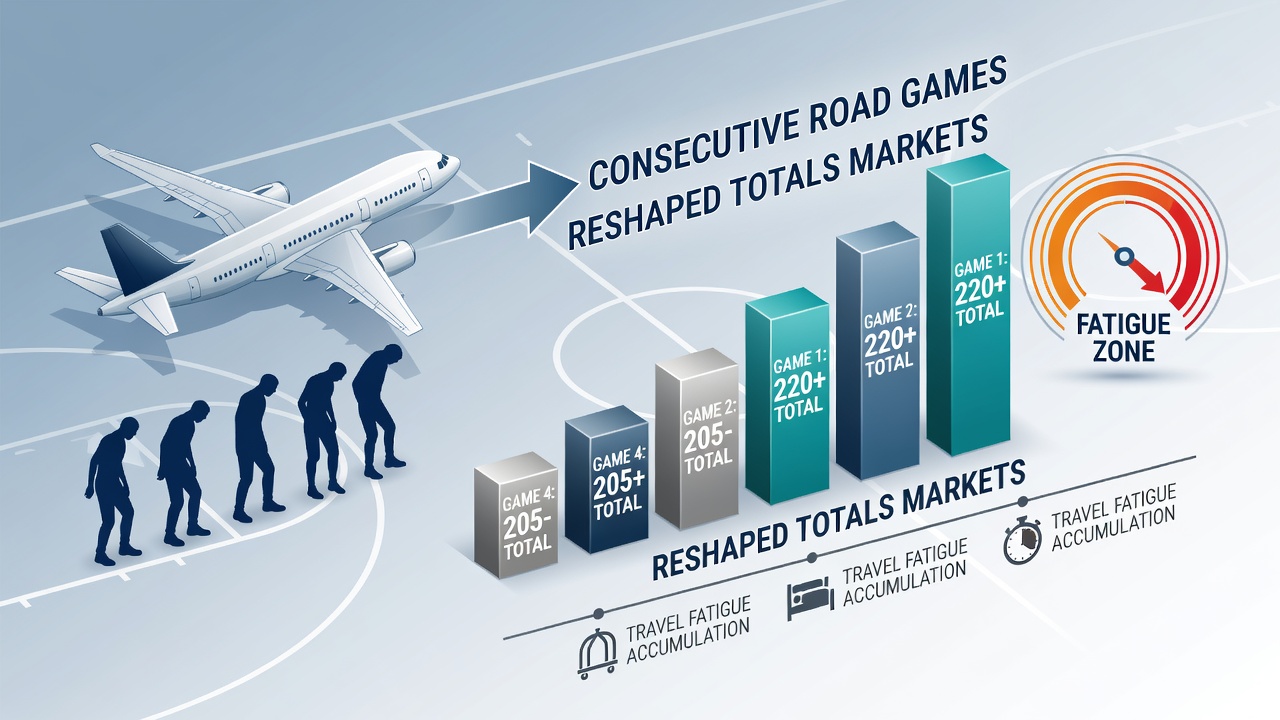
Market odds adjust accordingly as bookmakers incorporate historical data into their models. Lines for games involving teams arriving from previous-night road wins or losses often open two to three points lower than neutral expectations. Evidence from Canadian sports research institutes confirms that altitude changes and climate shifts add another layer, especially on cross-country jaunts that coincide with June schedule adjustments for playoff positioning in 2026.
Key Factors Driving Market Shifts
- Recovery time between tip-offs shrinks to under 24 hours in many cases, limiting access to full training facilities.
- Player availability reports show higher instances of minor ailments surfacing on the second night of road pairs.
- Opposing defenses exploit slower transition play, holding teams under season averages for field goal attempts in the paint.
European sports performance labs have documented parallel effects in other leagues, where similar travel loads correlate with reduced three-point volume and fewer free-throw opportunities. These elements combine to reshape how totals markets price games, with sharp bettors targeting unders when public perception overlooks the fatigue variable.
Strategic Implications for Market Participants
Those monitoring line movements observe that totals drift further toward the under as game day approaches and injury reports confirm rested opponents. Australian Institute of Sport studies on athlete travel underscore the role of jet lag in decision-making speed, which translates to fewer assists and higher turnover rates during the second leg of road trips. Such details allow market watchers to anticipate where value appears before odds fully reflect the data.
Teams returning home immediately after consecutive road games often rebound with elevated scoring, creating contrast that sharpens totals lines in subsequent contests. Observers tracking these cycles find repeatable edges in June windows when schedules tighten around conference finals and early off-season preparation begins.
Conclusion
Travel fatigue from consecutive road games produces consistent effects on basketball scoring that ripple through totals markets. Comprehensive tracking data and cross-regional research establish clear correlations between transit demands and reduced outputs, enabling precise market adjustments. As schedules evolve into 2026, these patterns continue to inform how lines form and shift around affected fixtures.